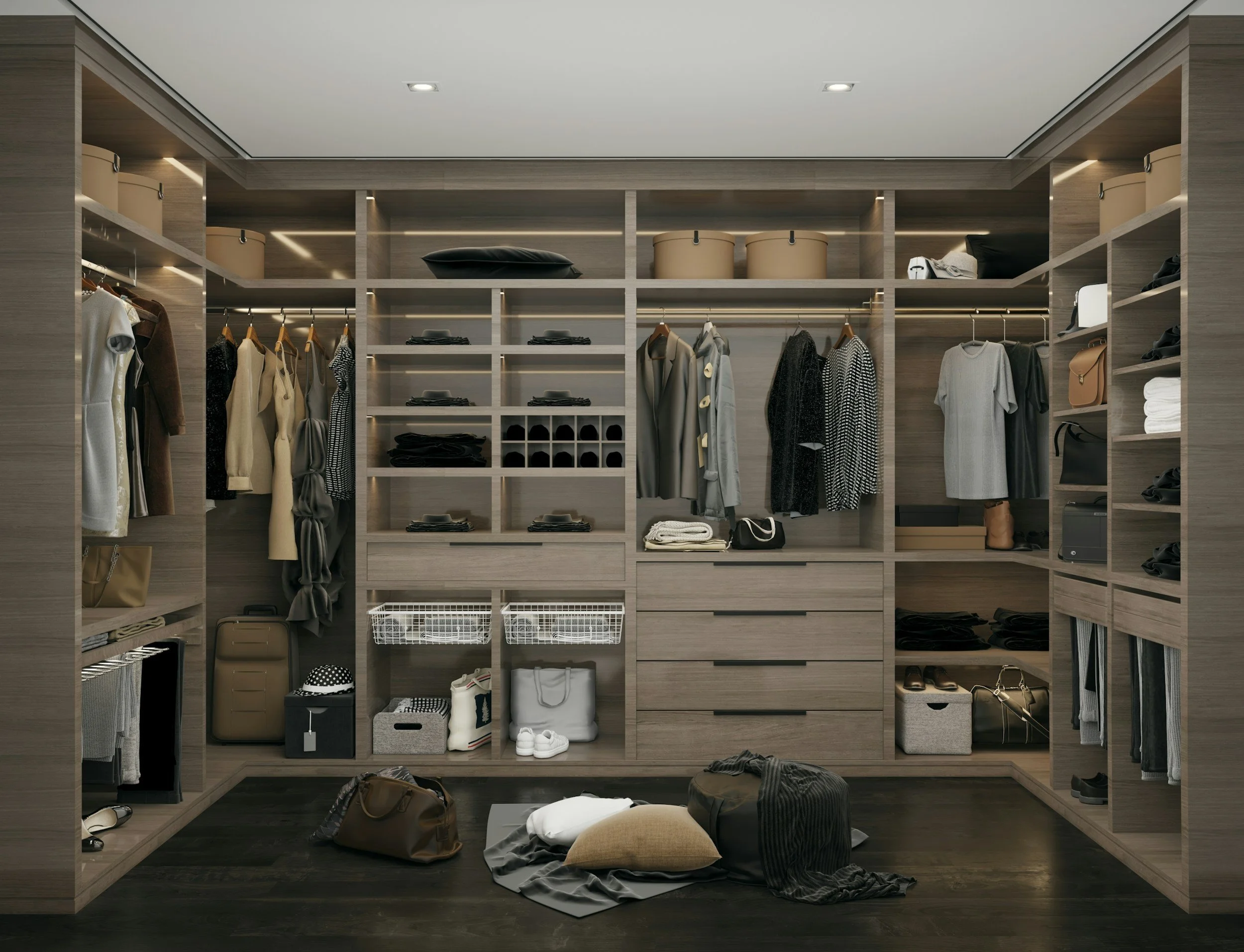
Cluttered Closets and Cluttered Schedules
A Simple Way to Think About Time
One of the first books I read about time management was by author Julie Morgenstern entitled Time Management from the Inside Out. What I loved about this book was how it simplified something that often feels overwhelming and made it far less intimidating - time management for the individual.
One concept that stayed with me is Julie’s analogy of comparing a schedule to a closet. It’s surprisingly accurate:
A cluttered closet has limited space. A cluttered schedule has limited hours.
An overstuffed closet is crammed with more things than it can hold. An overstuffed schedule is crammed with more tasks than it can handle.
In a messy closet, items are shoved in wherever they fit. In a messy schedule, tasks are squeezed into any open pocket of time.
A haphazard closet makes it hard to see what you own. A haphazard schedule makes it hard to see what you actually need to get done.
When you see the similarities, the idea of time becomes less abstract. A day is a container with a fixed capacity.
Tasks are like the items you’re trying to fit inside. Some are small, some are bulky, and how you arrange them depends on your priorities. Just like a closet, what matters most should be the easiest to access. I love this visualisation tool and it certainly helps me to see the day ahead with clarity.
Here’s where the analogy gets really useful:
Daily essentials are like your go-to clothes—meals, commuting, classes, routines.
Occasional items are like special outfits—appointments, celebrations, meetings.
Project steps are like seasonal pieces—research, emails, errands.
Everything needs a space. If your “day closet” is already packed, you have three choices: let go of something, put it on hold or give it to someone else.
So how do you actually organise your day the way you’d organise a closet? Here are a few practical steps:
Empty Before You Fill
When tidying a closet, you pull everything out to see what you’ve got. Do the same with your time; write/type out each week all tasks, commitments, and ideas. This gets them out of your head and onto paper. Clarity starts with a clean slate.Sort by Category
Shirts with shirts, shoes with shoes. In your schedule, group tasks: emails together, errands together, meetings together. This makes it easier to “put them away” neatly and prevents wasted energy from constant switching of contexts.Prioritize the Everyday Essentials
Your go-to clothes live in the most accessible spots. Likewise, give priority to non-negotiables—meals, rest, exercise, family time—and place them in your calendar. Then you can work around them.Give Big Items Enough Space
You wouldn’t stuff a winter coat into a shoebox. Big, demanding tasks deserve generous time blocks. Protect those spaces instead of squeezing them between smaller tasks.Use Containers for the Small Stuff
Accessories belong in drawers or boxes. Likewise, small tasks (quick calls, messages, emails) fit neatly into short, designated windows instead of spilling across the whole day.Rotate and Refresh
Just as closets need seasonal cleaning, schedules need regular review. Ask: Does this task still fit? Should I donate it (delegate), store it (postpone), or let it go entirely?Leave Breathing Room
An overstuffed closet is stressful, and so is an overstuffed day. Leave empty space for downtime, creativity, and the unexpected. That margin is where ease and balance live.
The beauty of this mindset is that it gives you a clear visual: time as a container, tasks as items, and you as the curator of what belongs. Each morning, ask yourself: Does everything important have a space in my day? Or am I stuffing in so much that nothing fits well?
A well-organised wardrobe or closet makes getting dressed easier. A well-organised day makes living easier. Both free up energy, time, and clarity for what really matters.